L'Shana Tova – Warm Wishes from Summit Management Services

From all of us at Summit Management Services, we want to take a moment to wish you and your families a wonderful and peaceful Rosh Hashanah - a New Year filled with love, meaning, and renewal.

A Brief History:


Rosh Hashanah, which means “Head of the Year,” is the Jewish New Year and marks the beginning of the High Holy Days. It is both a celebration and a time for reflection, dating back to biblical times. Traditionally, the holiday is observed with the sounding of the shofar (ram’s horn), festive meals featuring symbolic foods like apples dipped in honey, and prayers focused on renewal, forgiveness, and hope for the year ahead.

For those of you participating, may you enjoy these special days surrounded by family and friends, and may the year ahead be one of health, happiness, and success.

L'Shana Tova!
Warmly,
All of us at Summit Management Services

#EventPlanning #MeetingManagement #CorporateEvents #SummitManagement #EventStrategy #VenueManagement #VIPCoordination #OnSiteManagement #Meeting2024 #Meeting2025 #InternationalEvents #InternationalMeetingPlanner #JoeKnows #ClaudetteKnows #RobKnows

#AskMrLipman #MeetingExpert 

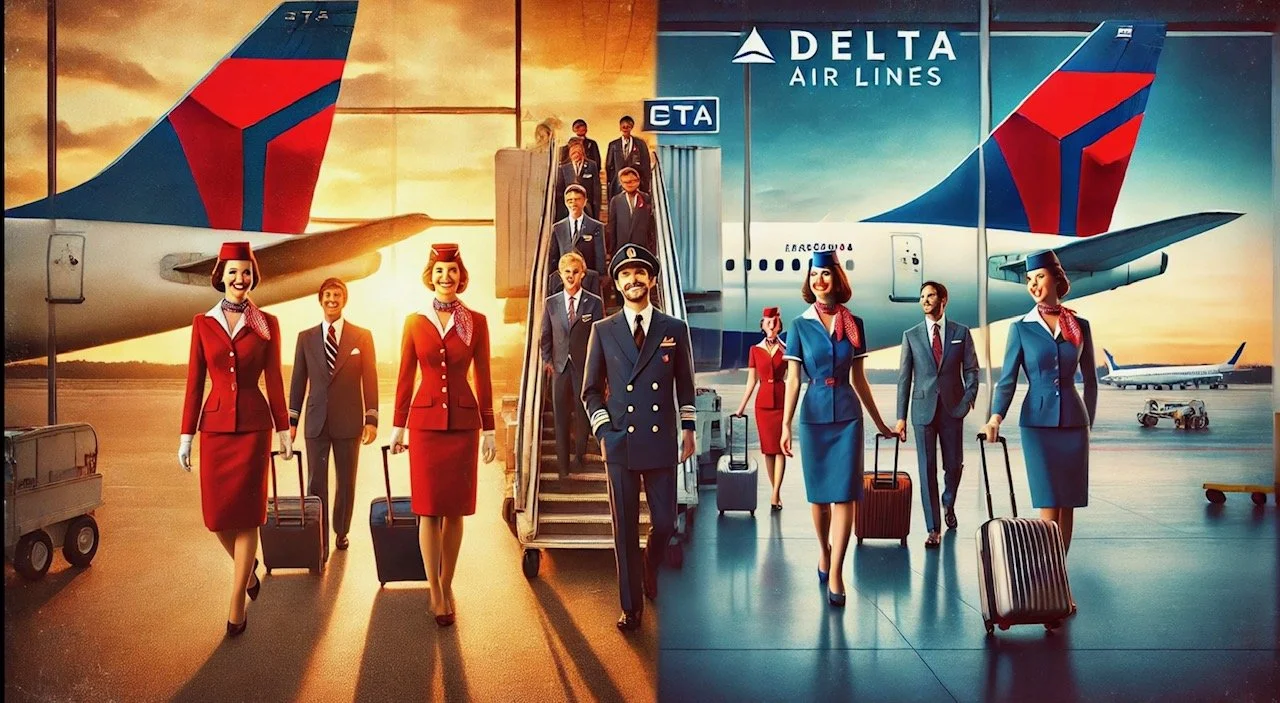
Delta Airlines: From Southern Hospitality to Sky-High Change

Do you remember it? Delta Air Lines — back when stepping onto a plane felt like stepping into an occasion. It was the airline that combined Southern hospitality with dependable service, based proudly out of Atlanta, Georgia.

It wasn’t always a global player. In 1924, Delta began as Huff Daland Dusters, an agricultural crop-dusting outfit in Macon, Georgia. By 1929, it had rebranded as Delta Air Service and was flying passengers in its first commercial aircraft — the Travel Air S-6000B — between Dallas, Texas, and Jackson, Mississippi. Atlanta became its home in the 1940s, and from there, the airline grew into one of the most respected carriers in the United States.

The Travel Agent Break-Up

For decades, travel agencies were the lifeblood of Delta’s passenger business. Agents booked everything from corporate trips to family vacations, filling the seats of Delta jets worldwide. This relationship was cemented through commission payments — typically 10% of a ticket’s cost.

But in 1995, Delta made a bold and controversial move: it capped those commissions at $50 on domestic tickets. Within a few years, it eliminated base commissions altogether. The reasoning was simple — cut distribution costs and sell directly to travelers via call centers and the rapidly emerging internet.

For the agencies, it was a body blow. After years of building Delta’s brand and customer base, they suddenly found themselves cut out of the revenue stream. It was the beginning of a new era in which airlines went their own way, and loyalty between carriers and agencies unraveled.

Deregulation and the Price Paradox

Before 1978, the Civil Aeronautics Board (CAB) regulated routes, fares, and schedules. This meant airlines competed more on service than on price — and Delta excelled. Coach class came with meals served on china, wide seats, and attentive crews who had the time and freedom to make travel feel special.

When deregulation arrived, competition exploded. Prices on many routes fell, giving millions more Americans the chance to fly. But it came at a cost — bankruptcies, mergers, and deep cuts to service standards.

The strange twist? On certain routes, fares today are similar to what they were in the late 1970s — without adjusting for inflation. For example:

• Newark–Miami

• JFK–Miami

• LaGuardia–Miami

In the 1970s, regulated one-way fares on these routes ran about $125–$150. Adjusted for inflation, that’s $600+ today — yet you can still find base fares for $150–$200. The price looks the same, but the experience is nowhere near what it was.

Then vs. Now: Service in the Skies

Then:

• Wide, comfortable seating with extra space.

• Complimentary hot meals served on real dishes.

• Gate agents and crews who recognized frequent flyers by name.

• Flights that felt more like a social occasion than a transaction.

Now:

• Tight seat pitch and full flights.

• Buy-on-board snacks replacing complimentary meals.

• Crowded boarding gates and rushed turnarounds.

• Fewer frills, more fees.

There are still bright moments — a kind flight attendant, a smooth on-time arrival — but the grandeur of air travel’s golden age is a fading memory.

Was Regulation Better?

Regulation brought stability, predictable fares, and a focus on passenger comfort — but at a price point that limited air travel to the middle and upper classes. Deregulation democratized the skies, allowing more people to fly more often, but it also pushed airlines toward cost-cutting, consolidation, and a less personal travel experience.

Delta’s journey — from a six-passenger Travel Air to a global network spanning six continents — reflects the transformation of the entire U.S. airline industry. The soul of Southern hospitality is still there, but the business realities of modern aviation have reshaped what flying means.

Closing Thought: Next time you see a Delta tail on the tarmac, remember: that logo has flown through nearly a century of change — from dusting crops in Georgia to navigating the turbulence of deregulation and beyond.

#DeltaAirLines #AirlineHistory #AviationHistory #GoldenAgeOfFlight #SkyHighChange #FromCropDustToJets #AirlineEvolution #JoeKnows #IncentiveTravel #AskMrLipman  #LuxuryResorts


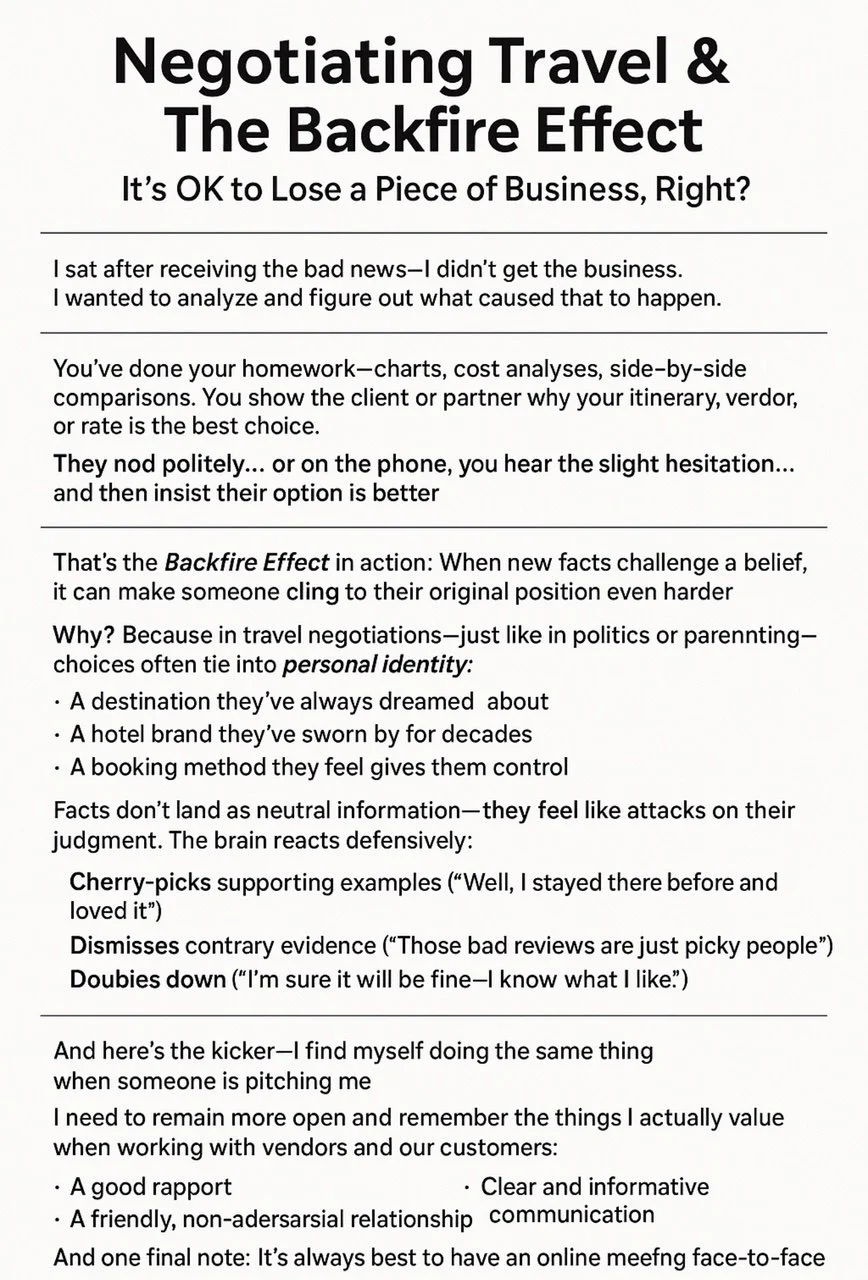
Negotiating Travel & The Backfire Effect — It’s OK to Lose a Piece of Business, Right?

I sat after receiving the bad news — I didn’t get the business.
I wanted to analyze and figure out what caused that to happen.

The truth? I may have been so focused on showing the other side my facts, my charts, and my “perfectly reasoned” proposal that I forgot something crucial: people rarely change their minds when they feel they’re being cornered.

You’ve done your homework — charts, cost analyses, side‑by‑side comparisons.
You show the client or partner why your itinerary, vendor, or rate is the best choice.
They nod politely — or better yet, if it’s over the phone, you catch that tiny hesitation in their voice, that fractional pause that says they’re not convinced… even before they say a word.
And then they insist their option is better.

That’s the Backfire Effect in action:
When new facts challenge a belief, it can make someone cling to their original position even harder.

Why?
Because in travel negotiations — just like in politics or parenting — choices often tie into personal identity:
        •       A destination they’ve always dreamed about
        •       A hotel brand they’ve sworn by for decades
        •       A booking method they feel gives them control

Facts don’t land as neutral information — they feel like attacks on their judgment.
The brain reacts defensively:
        •       Cherry-picks supporting examples (“Well, I stayed there before and loved it”)
        •       Dismisses contrary evidence (“Those bad reviews are just picky people”)
        •       Doubles down (“I’m sure it will be fine — I know what I like”)

So what works instead?

Instead of pushing facts harder, shift the dynamic:
        1.      Ask curious questions
        •       “What’s most important to you on this trip — relaxation, exploration, or convenience?”
        2.      Create space for reflection
        •       “Let’s keep both options on the table and see what fits your vision best.”
        3.      Invite them into the process
        •       “If we blend your idea with mine, we might land on the perfect plan.”

And here’s the kicker — I find myself doing the same thing when someone is pitching me.
I need to remain more open and remember the things I actually value when working with vendors and our customers:
        •       A good rapport
        •       A friendly, non-adversarial relationship
        •       Clear and informative communication

Those are the elements that create the kind of trust where deals get done.
They’re not just nice-to-haves — they’re the real foundation of a good working relationship.

And one final note: whenever possible, it’s always best to have an online meeting face‑to‑face. Seeing each other — even virtually — builds rapport, reduces misunderstandings, and often makes it easier to spot the hesitation or concerns before they become deal-breakers.

 #JoeKnows #AskRob #GroupTravel #IncentiveTravel  #NextNormalMeetings #InvestigatorMeetings #MedicalMeetings

PS. Do you have a meeting I can help with? Email me at Joe@summitmgt.com

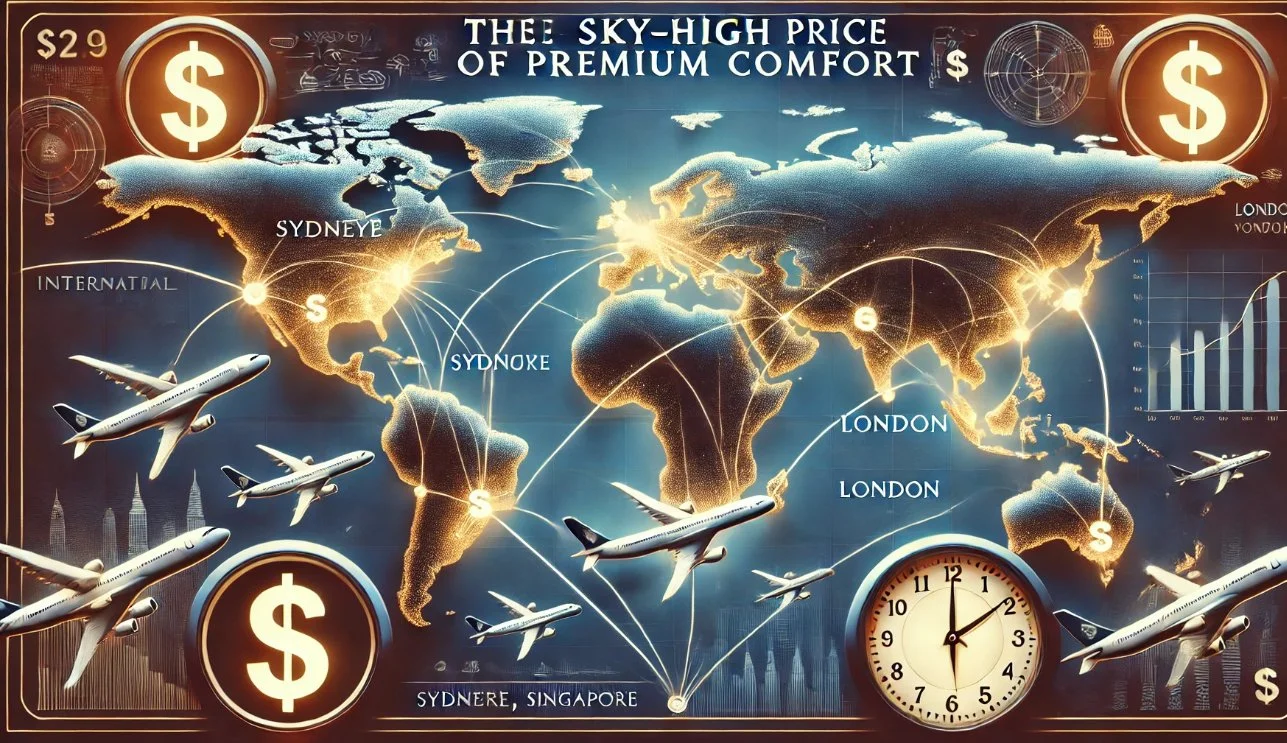
The Ultra-Long-Haul Revolution: Qantas, Singapore Airlines, and the Sky-High Price of Premium Comfort

Qantas is aout to change the map of commercial air travel. Under its ambitious Project Sunrise initiative, the Australian carrier is preparing to launch nonstop flights from Sydney to New York and London—each of them expected to exceed 10,000 nautical miles and last up to 21 hours in the air. These flights, which will claim the title of longest commercial routes ever flown, are scheduled to begin in 2026, using specially configured Airbus A350-1000ULR aircraft.

But what makes Project Sunrise notable isn’t just the distance—it’s the intent. Qantas aims to offer a full four-class experience, including First, Business, Premium Economy, and a redesigned Economy cabin, along with an in-flight wellness zone and circadian lighting to reduce jet lag. These flights will literally redefine the limits of human endurance in the sky—and passengers will pay accordingly.

Singapore Airlines: The Current Champion

Until Qantas takes the crown, the title of the world’s longest commercial flight still belongs to Singapore Airlines with its nonstop service between Singapore (SIN) and New York (JFK and EWR).

• Route: Singapore–New York

• Distance: 9,537 nautical miles (10,950 miles / 17,700 km)

• Flight time: Up to 18 hours, 50 minutes

This marathon route is operated by the Airbus A350-900ULR, but what’s most striking is its configuration: no economy seats at all. The cabin features only 67 Business Class and 94 Premium Economy seats—161 total passengers on a jet that could hold over 300.

Singapore Airlines made a bold economic choice: this flight caters exclusively to premium travelers. Fewer seats mean less weight, better fuel efficiency, and higher revenue per square foot. And passengers get what they pay for—spacious seating, upgraded meals, luxury amenities, and seamless ground service.

Dig Deep into the Pocketbook: Flying Premium Has Never Cost More

We’ve entered a new era in aviation—where the ability to fly far is matched only by the cost of flying well. Consider this:

Not long ago, you could buy a First Class “around-the-world” ticket for $6,700. That included multiple stopovers, first-class lounges, impeccable onboard service, and global flexibility.

Today, that same $6,700 may not even get you a single business class round trip from New York to Singapore. And an actual first-class “RTW” itinerary? You’ll likely need $25,000–$40,000.

Current Premium Fare Benchmarks (Round Trip):

Singapore Airlines Business Class (SIN–NYC): $6,000–$9,500

• Singapore Airlines Premium Economy (SIN–NYC): $2,200–$3,800

• Qantas Project Sunrise (Expected):

• First Class: $10,000–$20,000

• Business Class: $6,500–$11,000

• Premium Economy: $2,500–$4,000

• Economy: $1,400–$2,200

• Emirates First Class (NY–DXB): $9,000–$13,000

• United Polaris (SFO–SIN): $4,000–$6,500

• Cathay Pacific Business (HKG–NYC): $5,000–$8,000

Longest Commercial Flights (By Distance):

Rank, Route, Airline, Distance (nm) ,Time (hrs)

  • 1 - Singapore – New York (JFK/EWR), Singapore Airlines, 9,537 nm, ~18h 50m

  • 2 - Perth – London, Qantas, 7,829 nm, ~17h 30m,

  • 3 - Dallas – Melbourne, Qantas, 8,992 nm, ~17h 30m

  • 4 - Auckland – Dubai, Emirates, 7,668 nm, ~17h 10m

  • 5 - Los Angeles – Singapore, Singapore Airlines, 7,621 nm ,~17h 50m

With Qantas’ Sydney–London and Sydney–New York expected to reach 10,250–10,500 nautical miles, the future of ultra-long-haul flying is expanding—fast.

A New Class Divide in the Sky

This shift isn’t just about distance—it’s about how travel is stratifying. While economy passengers face tighter seats, limited services, and a la carte fees, premium travelers enjoy multi-course meals, luxury bedding, private pods, and VIP lounges.

Even premium economy, once seen as an affordable upgrade, now commands $2,000–$4,000 round trip—what used to be the cost of business class just a decade ago.

Final Thoughts

What used to cost $6,700 for an entire round-the-world first-class journey now barely covers a single ultra-long-haul leg. Today’s skies are not just defined by distance—they’re shaped by access, luxury, and the willingness to pay for the privilege of skipping layovers and sleeping at 35,000 feet.

As Qantas prepares to push aviation to its physical and economic limits, and Singapore Airlines continues to perfect the model of premium endurance, one thing is certain:

The future of flight is faster, farther, and more expensive than ever before.

Please note that many of the fares mentioned above are approximate and subject to change. Some may be in effect now, while others may not be available year-round. Always check with your trusted travel advisor to confirm the lowest applicable fare based on your travel dates, destination, and class of service. Seasonality, route demand, and promotional inventory can significantly affect pricing—so expert guidance remains more valuable than ever.

#JoeKnows #AskMarty #ASKROB # #AskMrLipman  #Meetings

Finally — No More Taking Shoes Off at the Airport (Effective Immediately)

This is great news. Starting immediately, TSA is no longer requiring travelers to remove their shoes at airport security checkpoints.

Honestly, it’s about time — walking barefoot through crowded, unsanitary lines never felt safe or clean. This policy has been in place for decades, all because someone once tried to sneak an incendiary device hidden in their shoes.

While it may not dramatically speed up TSA lines, it will certainly make the process more comfortable and less intrusive. I’m curious to see if other countries or airlines will follow suit. Let’s just hope it sticks.

The big question now is what will Europe and other parts of the world be doing pertaining to this? Are the rules still in effect across the EU, UK, and Asia? While the U.S. has taken the first step, many international airports still require shoe removal — often with even stricter protocols in place. It remains to be seen whether global aviation authorities will reassess and modernize their own procedures in response.

In addition to this policy change, TSA announced its “Serve with Honor, Travel with Ease” program on July 2, offering special benefits to uniformed service members and their families — including discounted PreCheck enrollment and expedited access lanes at select airports.

And in May, TSA began full implementation of REAL ID at airport checkpoints. With a 94% compliance rate, the rollout has already contributed to a more efficient security screening process overall.

#JoeKnows #AskJoe #SummitManagement #TSAUpdate #NoMoreShoesOff #TravelMadeEasy
#AirportSecurity #TravelNews

A 4th of July Reflection on the Power of Movement, Even in Divided Times

From Turbulence to Triumph: How Travel Carried America Forward (1970–2025) A 4th of July Reflection on the Power of Movement, Even in Divided Times

As we mark another Independence Day, most people look to government, business, media, or politics to explain where America’s been, and where it’s going. But those don’t tell the full story.

There’s another force that quietly shaped our resilience, curiosity, and joy: travel.

From cross-country road trips and jumbo jets, to Disney vacations and African safaris, the travel industry helped keep America’s spirit alive, regardless of politics, inflation, war, or recession. Every decade brought challenges. But each one also brought a new way to move, connect, and dream.

Here’s how America moved through the decades, with five pillars shaping us:

Government. Business. Media. People. And Travel.

1970s – Big Dreams, Big Disillusionment

What Lifted Us:
• Apollo missions and the first Earth Day
• Walt Disney World (1971) opens
• Amtrak gives hope to U.S. rail
• Boeing 747s take Americans farther, faster
• Cruise lines and South African rail tours create bucket-list dreams

What Grounded Us:
• Watergate and the energy crisis
• Oil prices spike travel costs
• Anti-war protests turn violent

1980s – Glitz, Deregulation, and Global Windows

What Lifted Us:
• Airline deregulation leads to lower fares, more flights
• EPCOT (1982) expands global imagination
• MTV, CNN, and cruise ships project America worldwide
• Eurail passes make Europe accessible for U.S. backpackers

What Grounded Us:
• Corporate greed and inequality
• Airline collapses (Eastern, Braniff)
• Rising crime coverage dampens optimism

1990s – Peace, Passports, and Prosperity

What Lifted Us:
• The golden age of frequent flyer programs
• Las Vegas rebrands as a family destination
• Disneyland Paris opens
• High-speed trains in Europe amaze U.S. travelers
• Africa becomes a new dream destination

What Grounded Us:
• Trade deals cost U.S. jobs
• Sensationalism in media rises
• Growing generational and geographic disconnect

2000s – Shock, Reinvention, and Security Lines

What Lifted Us:
• Post-9/11 unity inspired national pride
• Travelocity, Expedia, and Kayak empower travelers
• Mega-cruises expand to Alaska, Panama Canal, Europe
• U.S. tourists rediscover RVing and national parks

What Grounded Us:
• 9/11 transforms airports forever
• The Iraq War and Great Recession
• Airline bankruptcies (American, United, US Airways)

2010s – Tech, Turbulence, and Tailwinds

What Lifted Us:
• Airbnb revolutionizes where we stay
• Airline mergers create global networks (Delta/Northwest, United/Continental)
• Cruises introduce freestyle dining and private islands
• Millennial travelers chase experiences over things

What Grounded Us:
• Overtourism in hotspots like Venice and Machu Picchu
• Tribalism divides the country
• Local economies suffer when travel becomes unaffordable

2020s – Shutdowns, Shakeups, and New Shores (To 2025)

What Lifted Us:
• After COVID, RV travel and national parks boomed
• Rental homes became the go-to for family getaways
• Many Americans left crowded cities, investing in second and third homes
• These properties created generational wealth and revitalized vacation towns
• Brightline launched high-speed rail in Florida
• Cruises returned, stronger and safer
• Americans rediscovered domestic beauty and sought long-awaited global adventures: Africa, Japan, South America

What Grounded Us:
• Passport delays and sky-high airfares
• Staffing shortages at airports and cruise ports
• Political uncertainty clouds global movement

Final Boarding Call: The Takeaway for July 4, 2025

We built this country through shared effort. But we held it together through shared discovery. Even when the world broke, we kept moving, and that made all the difference.

Travel isn’t just leisure. It’s perspective.
It’s connection. It’s freedom.
It’s America at its best.

So this Fourth of July, celebrate the right to go, to see, and to remember:
The road ahead has always been America’s greatest path forward.

#JoeKnows #IncentiveTravel #AskMisterLipman

What built Us, What Broke Us - and Why We Still Celebrate July 4th

We often say “Happy Fourth” with fireworks and cookouts. But to understand what it means to be American in 2025, we must look back with clear eyes at both the triumphs that lifted us up, and the fractures that nearly tore us apart.

There was a time - especially in the 1970s and 1980s - when you didn’t need to stamp “Made in America” on something to know it had value. The strength of this country was in our resolve, our unity, and our belief in a shared future. But through each decade, forces from within and beyond challenged that belief, and we’ve had to fight to hold the fabric of America together.

Part 1: The Nation

1970s – Distrust and Decline Amid Grit and Glory

What Moved Us Forward:
   •   The Bicentennial celebration (1976)
   •   The space race and moon missions
   •   American rock and cultural expression
   •   Muscle cars and booming main streets

What Pulled Us Apart:

   •   Watergate scandal: Public trust in government collapsed
   •   Vietnam War fallout: Divided generations
   •   Energy crisis: Long gas lines and inflation
   •   Rise of domestic terrorism (Weather Underground)

1980s – Revival and Reinvention Shadowed by Rising Greed

What Moved Us Forward:
   •   Reagan-era optimism and economic recovery
   •   Miracle on Ice
   •   MTV and pop culture explosion
   •   Rise of Apple and Microsoft

What Pulled Us Apart:
   •   AIDS crisis mishandled
   •   War on Drugs: Over-policing and racial disparities
   •   Iran-Contra scandal
   •   Wall Street excess

1990s – Technological Hope, Cultural Shifts, and Global Overreach

What Moved Us Forward:
   •   Internet and tech boom
   •   Victory parades post-Gulf War
   •   Iconic TV & shared entertainment
   •   Strong economic expansion

What Pulled Us Apart:
   •   NAFTA & globalization: Factories closed, towns hollowed out
   •   Rise in school shootings (Columbine)
   •   Waco & Oklahoma City
   •   Clinton impeachment: The start of hyper-polarization

2000s – Unity in Crisis, Division in Recovery

What Moved Us Forward:
   •   National unity post-9/11
   •   Tech innovation (iPhones, broadband)
   •   Military service pride
   •   Country music’s patriotic revival

What Pulled Us Apart:
   •   9/11 and the forever wars
   •   Iraq War under false pretense
   •   2008 financial collapse
   •   Katrina response failure

2010s – Empowerment and Exposure in the Digital Age

What Moved Us Forward:
   •   Social media connectivity
   •   Return of local goods and crafts
   •   Private space innovation
   •   Community-driven food and events

What Pulled Us Apart:
   •   Social media tribalism
   •   Occupy Wall Street / Tea Party division
   •   Police violence and protests
   •   Culture wars in education and identity

2020s (Up to July 4, 2025) – Hard Truths and Fractured Foundations

What Moved Us Forward:
   •   Rebuilding after COVID
   •   Remote work revolution
   •   Space tech, AI, and innovation
   •   Renewed conversations about patriotism

What Pulled Us Apart:

   •   COVID mandates and vaccine wars
   •   Jan 6 and loss of trust in institutions
   •   Border chaos and immigration blame
   •   Weaponized justice from both sides

America Through the Decades: A July 4th Reflection on the Good, the Fun, and the Beautiful

There was a time — especially in the 1970s and 1980s — when we didn’t have to stamp “Made in America” on something to know it was ours. It was in the spirit, the sound, and the swagger. It was understood. It was felt. And on July 4th, we remembered who we were.

Today, as we gather for fireworks, parades, and backyard barbecues, it’s worth taking a moment to reflect — not on what divides us, but on what’s kept us going. Here’s a walk through the decades, highlighting the moments that moved us, defined us, and reminded us of the American dream — not the politics, but the people.

1970s – Grit, Guts, and Great Music

        1.      The Bicentennial (1976): America’s 200th birthday brought parades, patriotism, and pride. It was a nationwide reminder of how far we had come.
        2.      Apollo Missions: The moon was no longer the final frontier — it was our backyard. The space race inspired a generation of dreamers.
        3.      Classic American Rock: Springsteen, the Eagles, Fleetwood Mac — this was the heartbeat of America.
        4.      Muscle Cars and Main Street USA: We cruised in Camaros, Challengers, and Trans Ams — freedom had four wheels and a loud engine.

1980s – Optimism, Opportunity, and Over-the-Top Fun
        1.      The Reagan Era Rebound: Say what you want, but “Morning in America” captured a spirit of revival and belief in hard work.
        2.      The Miracle on Ice (1980): A ragtag U.S. hockey team beating the Soviets? Pure American magic.
        3.      MTV and Pop Culture Explosion: Music videos, blockbuster movies, and the birth of pop stars who defined a generation.
        4.      Entrepreneurship and Innovation: Apple, Microsoft, and countless small businesses were born — proving anyone could start something big.

1990s – Peace, Prosperity, and Pop Culture
        1.      The Internet Boom: From dial-up to dot com — America became the global hub of innovation.
        2.      The Gulf War Victory Parade: A short, sharp military campaign followed by a sea of flags in New York City. Pride was back.
        3.      Friends, Seinfeld, and TV That Brought Us Together: We gathered around the TV, not to tune out — but to laugh together.
        4.      Economic Expansion: Low unemployment, a booming middle class, and hope for the next generation.

2000s – Resilience, Unity, and Reinvention
        1.      9/11 Unity: In tragedy, we found strength. Flags flew high, neighbors helped neighbors, and “United We Stand” wasn’t just a slogan.
        2.      iPhones and iEverything: American tech reshaped the world — and we led the charge.
        3.      Country Music and the Red-White-and-Blue Revival: From Toby Keith to Lee Greenwood, patriotism had a soundtrack again.
        4.      Military Bravery Overseas: Whether you supported the missions or not, you respected the men and women who answered the call.

2010s – Expression, Empowerment, and the Rise of the Individual
        1.      Social Media Connection: The world shrunk, our voices got louder, and Americans became global influencers.
        2.      Revival of Made-in-USA Brands: From craft breweries to boutique denim, quality and local pride came roaring back.
        3.      SpaceX and the Private Space Race: A new generation of space pioneers, still flying under the American flag.
        4.      A Return to the Backyard: Food trucks, farmers markets, and Fourth of July picnics reminded us the simple things still matter.

2020s – Challenge, Change, and the Will to Keep Going
        1.      Coming Out of COVID: We lost a lot — but we rediscovered family, home, and resilience.
        2.      Remote Work Revolution: Freedom wasn’t just physical — we redefined what it means to work and live.
        3.      Patriotism Reconsidered: Not blind allegiance, but deep appreciation. We questioned, we argued, and we still waved the flag.
        4.      New Energy, Same Spirit: Whether it’s space tech, AI, or the American farmer — we’re innovating every day.


So This July 4th…

Don’t just watch the fireworks. Remember the fire inside that lit up every one of these decades. Being American has never been perfect — but it’s always been powerful. It’s baseball and burgers, yes, but it’s also building, believing, and bouncing back.

And no — we didn’t need to say “Made in America.” You just knew.

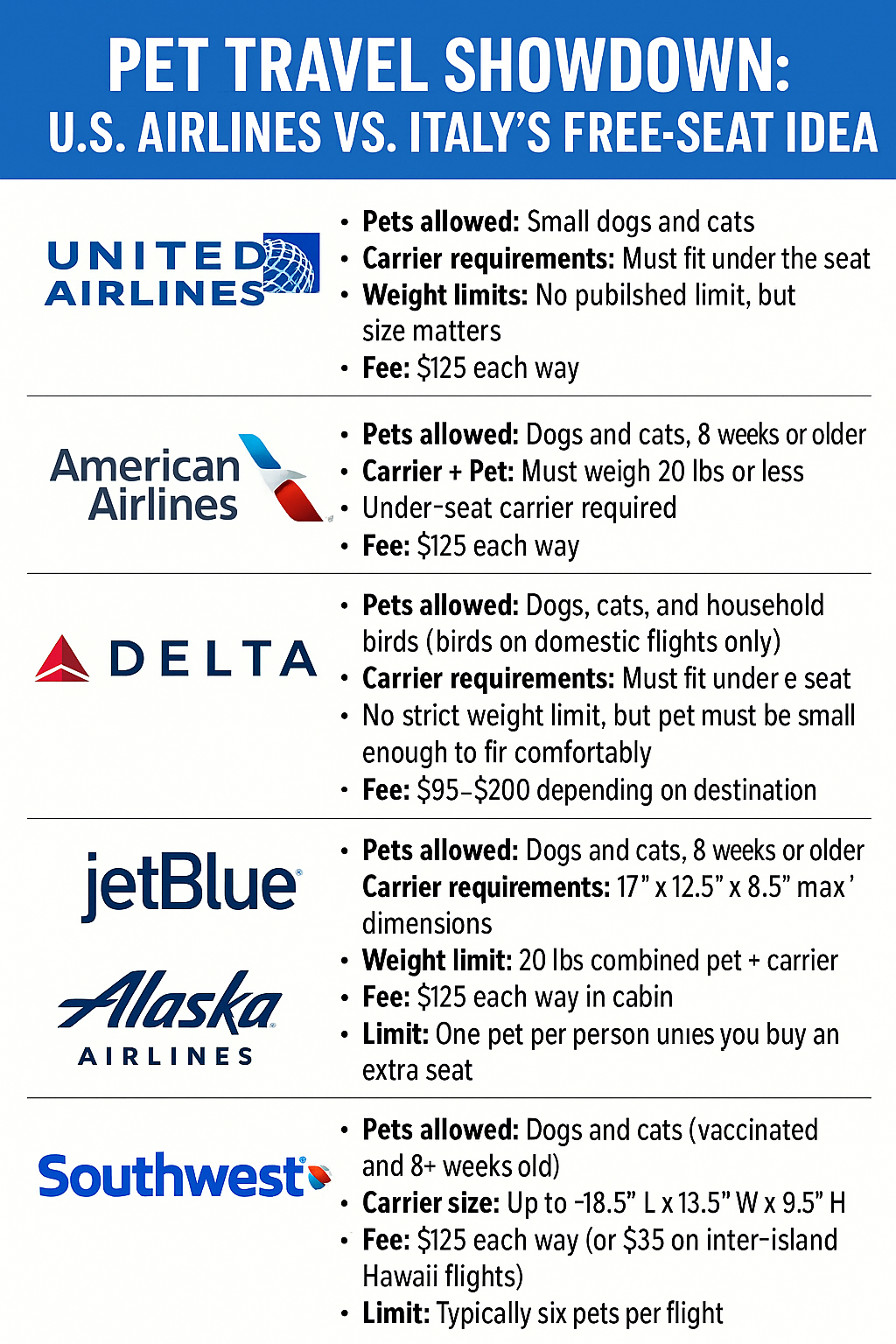
Pet Travel Showdown: U.S. Airlines vs. Italy’s Free-Seat Idea

Italy just made big news for pet lovers. ENAC, the country’s Civil Aviation Authority, announced that pets no longer need to meet strict weight limits to fly in the cabin. If a pet doesn’t fit under the seat, owners can now buy a second seat and place the pet in an IATA-compliant crate beside them. Revolutionary, right?

But here in the U.S.? We’re still flying with more rules and fewer paw-ssibilities. Here’s how the major U.S. airlines handle pet travel.

United Airlines: The Corporate Pet Parent

• Pets allowed: Small dogs and cats

• Carrier requirements: Must fit under the seat

• Weight limits: No published limit, but size matters

• Fee: $125 each way

Note: United’s PetSafe program for larger pets is currently suspended. It’s carry-on or stay home for now.

American Airlines: The Pet Middle Ground

• Pets allowed: Dogs and cats, 8 weeks or older

• Carrier + Pet: Must weigh 20 lbs or less

• Under-seat carrier required

• Fee: $125 each way

Some aircraft offer climate-controlled cargo, but no option to buy a seat for a larger pet in cabin.

Delta Airlines: Slightly More Flexible

• Pets allowed: Dogs, cats, and household birds (birds on domestic flights only)

• Carrier requirements: Must fit under the seat

• No strict weight limit, but pet must be small enough to fit comfortably

• Fee: $95–$200 depending on destination

Delta allows slightly larger pets than others, but they still must fit under the sea

JetBlue: The Space-Conscious Option

• Pets allowed: Dogs and cats, 8 weeks or older

• Carrier requirements: 17” x 12.5” x 8.5” max dimensions

• Weight limit: 20 lbs combined pet + carrier

• Fee: $125 each way

• Limit: Six pets per flight, one per traveler

You can bring two pets if you buy a second seat, but both must still fit under the seat.

Alaska Airlines: The Well-Rounded Choice

• Pets allowed: Dogs, cats, rabbits, and birds (with limitations after April 2026)

• Carrier rules: One per seat, but two pets OK in one carrier if they fit

• Fee: $100 each way in the cabin

• Limit: One pet per person unless you buy an extra seat

Cargo options are also available for larger pets.

Southwest Airlines: Budget-Friendly and Pet-Friendly

• Pets allowed: Dogs and cats (vaccinated and 8+ weeks old)

• Carrier size: Up to 18.5” L x 13.5” W x 9.5” H

• Fee: $125 each way (or $35 on inter-island Hawaii flights)

• Limit: Typically six pets per flight

Pets fly only on domestic routes. Soft carriers are encouraged.

What Can the U.S. Learn From Italy?

While Italy is paving the way for a more pet-inclusive cabin policy, U.S. airlines are still cautious. Safety, logistics, and aircraft layouts make it hard to follow Italy’s lead—at least for now. But with growing demand for pet travel flexibility, change could be on the horizon.

Tips for Traveling with Pets in the U.S.

• Book early — cabin space for pets is limited

• Use soft carriers — they offer more flexibility

• Measure carefully — under-seat sizes vary by plane

• Avoid sedation — most airlines prohibit sedated animals

• Have paperwork ready — health certificates may be required

• Plan comfort — bring treats, water, and a toy


Another Reason to Arrive Earlier at the Airport

Airport travel is already a hassle with delays, sinkholes, and staffing shortages. Now, United Airlines is adding another reason to get to the airport earlier. Starting June 3, all passengers, even those with just carry-on bags, must check in at least 45 minutes before departure. Previously, carry-on travelers had a 30-minute window.

Here’s how United’s new rule compares:

  • United: 45 minutes (starting June 3)

  • American Airlines: 45 minutes

  • Alaska Airlines: 50 minutes

  • Delta: 30 minutes (carry-on only)

Most travelers check in early via apps, but if you’re used to cutting it close, this change means you need to plan better. Download the app, check in early, and keep a charger ready. In today’s travel world, preparation beats speed.

#JoeKnows #AirTravelTips #UnitedAirlines #AirportLife #Incentivetravel #AskMrLipman

#15 for Departure - Newark Edition

If you’ve flown through Newark Liberty (EWR) lately, you’ve probably heard “You’re number 15 for departure.” What’s happening?

Well, Runway 4L/22R — Newark’s busiest — is closed for major rehab through June 15, 2025, and will continue with weekend closures through the end of the year. That means:

• Until June 15: Only 28 departures and 28 arrivals per hour

• Starting June 16: That bumps up slightly to 34 per hour, still way below the pre-construction norm of 77

• Weekend flight limits stay in place through December 31, 2025

A one-hour connection? Risky.

Especially if you’re switching terminals (like A to C).

Plan for delays. Pack your patience.

And no, this isn’t United’s fault.

#JoeKnows #askMrLipman

#NewarkAirport #TravelTips #RunwayClosure #AirlineOperations #PlanAhead #BusinessTravel #FlightDelays #EWR

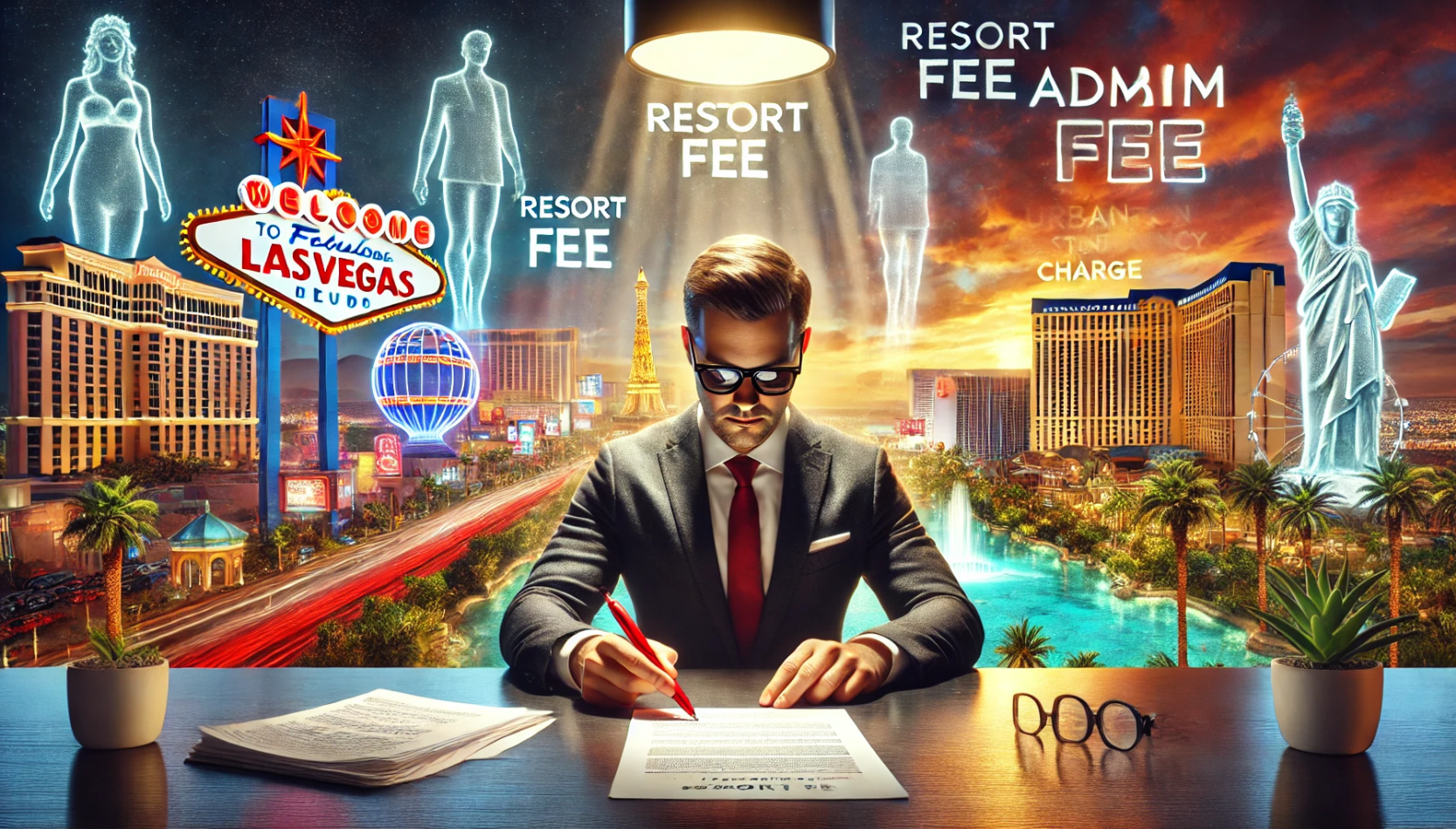
The Hidden Hotel Charges Are Coming to Light — What Meeting Planners Need to Know in 2025


For decades, hotel contracts have been padded with opaque fees—resort charges, internet access, administrative service fees, and more. What starts as a competitive room rate can quickly become a bloated final bill. But now, change is coming—and meeting planners in pharma, incentive, and corporate travel need to be ready.

The Legal Landscape Is Shifting

The Federal Trade Commission (FTC) is finalizing a new federal rule that will require full, upfront disclosure of all mandatory hotel fees—from resort charges to Wi-Fi, gym access, and banquet service surcharges.

States like California, Pennsylvania, and Nebraska are already cracking down. The FTC’s national regulation is expected to roll out in 2025.

This will make it illegal to:

  • Hide fees in fine print

  • Add charges post-contract

  • Exclude taxes, gratuities, and fees from advertised pricing

Why This Matters for You

Pharma Meetings
HCP programs face strict transparency and auditing. Surprise fees can create compliance headaches and audit risk. Every dollar must be accounted for and justifiable. This rule strengthens your ability to demand honest pricing.

Incentive Programs
Perks shouldn't come with hidden strings. Resort fees that mask higher rates or force on-site spending will be harder to justify. Expect tighter scrutiny on bundled pricing.

Corporate Travel
Tired of reconciling inflated invoices? Hidden surcharges will need to be disclosed upfront. This creates cleaner contracts, better forecasting, and tighter travel policy enforcement.

What About Loyalty Programs?

Hotel loyalty programs—like Marriott Bonvoy and Hilton Honors—typically exclude resort and admin fees from points accrual. That may change. With full fee transparency, programs may be pressured to calculate points on total spend, not just base room rate.

Elite travelers might notice a shift in how benefits like waived internet or gym fees are marketed—since those perks will no longer offset what hotels can’t legally charge anyway.

Vegas, Resorts & “Creative” Charges

High-fee destinations like Las Vegas, Orlando, and Miami will feel the heat. Some properties may roll resort fees into room rates; others may rename charges to sidestep regulation. Meeting planners should be on alert for relabeled costs such as “amenity fees,” “experience bundles,” or “urban destination charges.”

What You Can Do

  • Require total cost proposals in your RFPs

  • Demand line-item breakdowns in all contracts

  • Challenge vague language like “plus applicable service charges”

  • Get concessions in writing and not tied to conditional spend

Work With a Planner Who Knows the Rules

At Summit Management Services, we specialize in navigating hotel contracts with these changes in mind. We advocate for clear pricing, honest negotiations, and your bottom line.

If you’re booking your next hotel or meeting, don’t go it alone.

claudette@summitmgt.com
joe@summitmgt.com
rob@summitmgt.com

Let’s review your next hotel contract—before the hidden charges find their way back in.

#AskClaudette #JoeKnows #AskMrLipman #AskRob

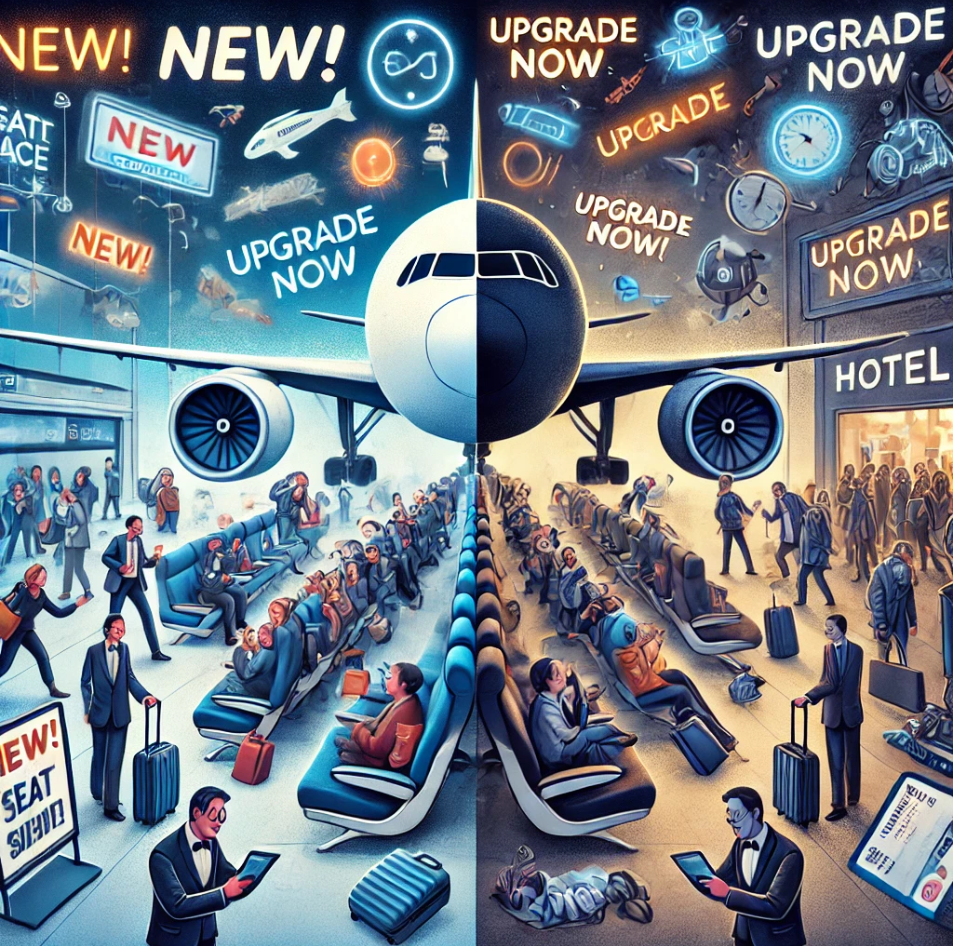
Travel's Dirty Secret: How Airlines and Hotels Trick You into Spending More

By Summit Management | April 30, 2025

Planned obsolescence—a cunning business tactic where products and services are intentionally designed to have a limited lifespan—ensures consumers keep coming back for more. In the travel industry, airlines and hotels masterfully deploy this strategy to boost profits while keeping travelers hooked. Buckle up as we unpack how these sectors manipulate demand, drive spending, and balance innovation with exploitation, with fresh insights into their tactics and their impact on you.

Airlines: Flying High on Forced Upgrades

Airlines don’t just transport you—they engineer reasons to make you spend more, often under the guise of “progress.” Here’s how they pull it off:

Relentless Fleet Upgrades

    • Tactic: Airlines phase out older planes for newer models boasting cutting-edge tech, better fuel efficiency, and plush interiors. For example, Boeing’s 787 Dreamliner or Airbus A350s promise quieter rides and mood lighting, while older 737s or A320s feel dated by comparison.

    • Impact: Travelers gravitate toward airlines with shiny new fleets, sidelining carriers with “outdated” planes. This creates a race to refresh fleets every 5-10 years, even when older models are perfectly safe. In 2024, Delta invested $14 billion in new aircraft, signaling a clear push to make their old planes obsolete.

    • Why It Hurts: You’re subtly coerced into choosing pricier tickets on newer planes, as older fleets are relegated to budget routes or retired entirely.

      Cabin Refits and Amenity Overhauls

    • Tactic: Airlines frequently revamp cabin layouts—think lie-flat beds in business class, Wi-Fi 2.0, or 4K in-flight entertainment screens. United’s Polaris business class, rolled out in 2023, set a new standard, making older cabins feel prehistoric.

    • Impact: These upgrades fuel a cycle of upselling. Passengers pay premiums for “new” experiences, while standard economy seats shrink to push upgrades. In 2024, global airlines spent $25 billion on cabin retrofits, per IATA, to keep the allure of “new” alive.

    • Why It Hurts: You’re nudged into splurging on premium seats or new services, as basic offerings are deliberately left underwhelming.

      Frequent Flyer Traps:

    • Tactic: Mileage programs like American’s AAdvantage or Emirates Skywards promise rewards but devalue miles through inflation or rule changes. For instance, Delta’s 2024 SkyMiles overhaul increased redemption thresholds by up to 20% for some awards.

    • Impact: Travelers rush to burn miles before they lose value, booking trips they might not need. This manufactured urgency drove a 15% spike in award travel redemptions in 2024, per Airlines for America.

    • Why It Hurts: You’re pressured to travel more often, often on the airline’s terms, to avoid losing your hard-earned rewards.

Hotels: Checking You In for More Spending

Hotels play the obsolescence game just as fiercely, using renovations and loyalty schemes to keep guests booking—and spending.

  1. Perpetual Renovations

    • Tactic: Hotels overhaul rooms, lobbies, and amenities every 5-7 years to stay “fresh.” Marriott’s 2024 redesign of 200 properties introduced smart thermostats and minimalist aesthetics, rendering older properties passé.

    • Impact: Guests flock to newly renovated hotels, shunning those with dated decor. In 2023, 60% of travelers surveyed by STR preferred hotels renovated within the last three years. This cycle ensures a constant stream of bookings at premium rates.

    • Why It Hurts: You pay higher rates for “new” rooms, while perfectly functional older properties are sidelined or forced to discount heavily.

  2. Loyalty Program Manipulation

    • Tactic: Hotel chains like Hilton Honors and IHG Rewards impose point expiration dates or adjust redemption rates. In 2024, Hyatt raised award night costs by 15% for peak seasons, forcing guests to act fast.

    • Impact: Guests book more stays to use points before they expire or become less valuable. This drove a 10% increase in loyalty-driven bookings in 2024, per Hotel News Now.

    • Why It Hurts: You’re pushed to plan trips around point deadlines, not your actual needs, locking you into the hotel’s ecosystem.

The Consumer Conundrum:

Planned obsolescence in travel is a double-edged sword. On one hand, it fuels innovation—newer planes are 20% more fuel-efficient, per ICAO, and modern hotels offer seamless tech like mobile check-in. These upgrades enhance comfort and sustainability. But the dark side is clear: travelers are manipulated into spending more, faster. The constant churn of “new” breeds frustration, with 68% of travelers in a 2024 Skift survey feeling airlines and hotels prioritize profits over customer value. This perception erodes trust, leaving consumers feeling like pawns in a revenue-driven game.

The Bigger Picture:

The travel industry’s reliance on planned obsolescence isn’t just about shiny new toys—it’s a structural necessity. Airlines face $600 billion in debt from the pandemic era, per IATA, and hotels grapple with rising operational costs. Obsolescence ensures cash flow but risks alienating customers. Some brands are pushing back: Southwest’s “no-frills” model resists flashy upgrades, and budget hotel chains like Motel 6 prioritize affordability over constant renovations. Yet, the industry’s heavyweights—think Delta, Marriott—double down on this strategy, betting on consumer FOMO.

Conclusion: Travel Smarter, Not Harder:

Planned obsolescence in travel is a calculated move to keep you spending. Airlines and hotels dangle the carrot of “new and improved” while quietly devaluing what you already have. As a traveler, you can fight back: compare fleet ages on sites like Planespotters.net, book award travel early to beat devaluations, and prioritize value over novelty. The industry may play its game, but with savvy choices, you can stay one step ahead.

  #JoeKnows #travel# #IncentiveTravel  # #AskMrLipman  #AskClaudette #NexttNormalMeetings 


Royal Caribbean Revised Itineraries

Royal Caribbean has recently revised the itineraries for several of its cruise routes, removing stops in Labadee, Haiti. Labadee, a private beach resort operated exclusively by the cruise line, has long been a popular destination for passengers.

The decision comes in response to escalating safety concerns in Haiti, including rising crime rates, gang violence, and ongoing political instability. The U.S. Department of State has issued a Level 4 travel advisory for the country - the highest alert level - warning travelers: “Do not travel to Haiti due to kidnapping, crime, civil unrest, and limited healthcare availability.

REAL ID Deadline Is Approaching – Are You Ready?

Starting May 7, 2025, U.S. travelers will need a REAL ID-compliant license or valid passport to board domestic flights and enter certain federal facilities.

At Summit Management, we’re helping our clients stay ahead with automated reminders and digital checklists so you’re never caught off guard.

Here’s what we’re doing:

   •   Sending personalized REAL ID alerts to clients based on travel dates

   •   Automating renewal deadlines into trip planning workflows

   •   Providing guidance on acceptable documentation

Don’t wait until it’s too late. Check your ID now and stay travel-ready!

#JoeKnows #incentivetravel #NextNormalMeetings #TravelTips #REALID #ClientSupport #AutomationInAction #Compliance #TravelReady #LinkedInNotice

Sent from Joe  Lipman's iPad. Sorry for spelling errors 

The Luxury Cruise Line You Didn’t Know You Were Missing – Save 5% Until April 22!

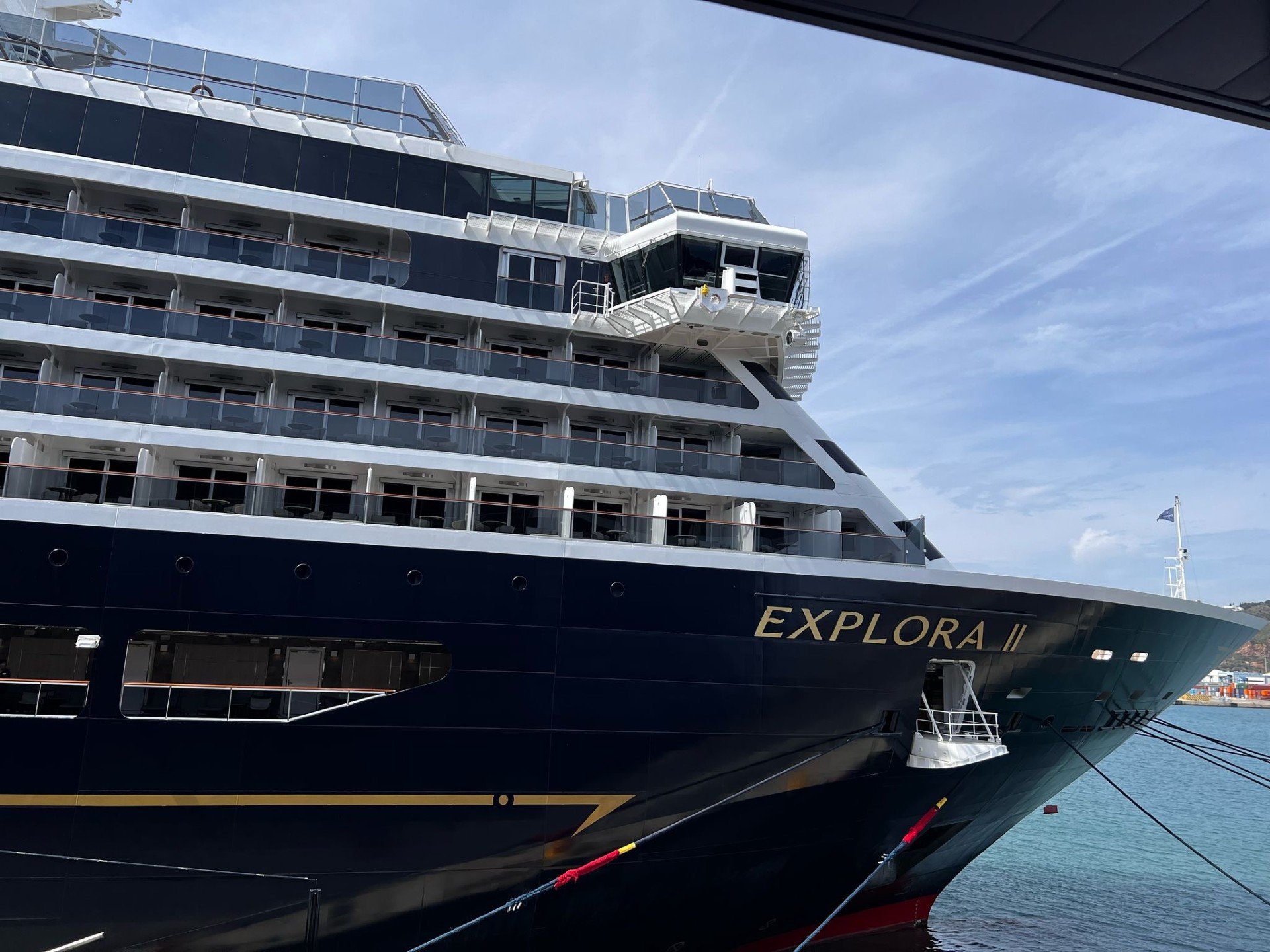
We get it — you’ve probably received dozens of brochures from cruise lines promising dream getaways and unbelievable offers. But if you're after a truly unique experience with a luxurious touch, let us introduce you to Explora Journeys — the European cruise line that blends generous space, elegant design, and culinary excellence into a bespoke, all-inclusive voyage.

Our Summit Exploration Team recently sailed from Barcelona to Casablanca aboard Explora — and we were absolutely blown away by the sophistication of the entire journey. While less known than luxury lines like Seabourn, Silversea, or Regent, Explora offers a comparable experience — often at the price of a high-end hotel stay — with so much more included.

What Makes Explora Stand Out?

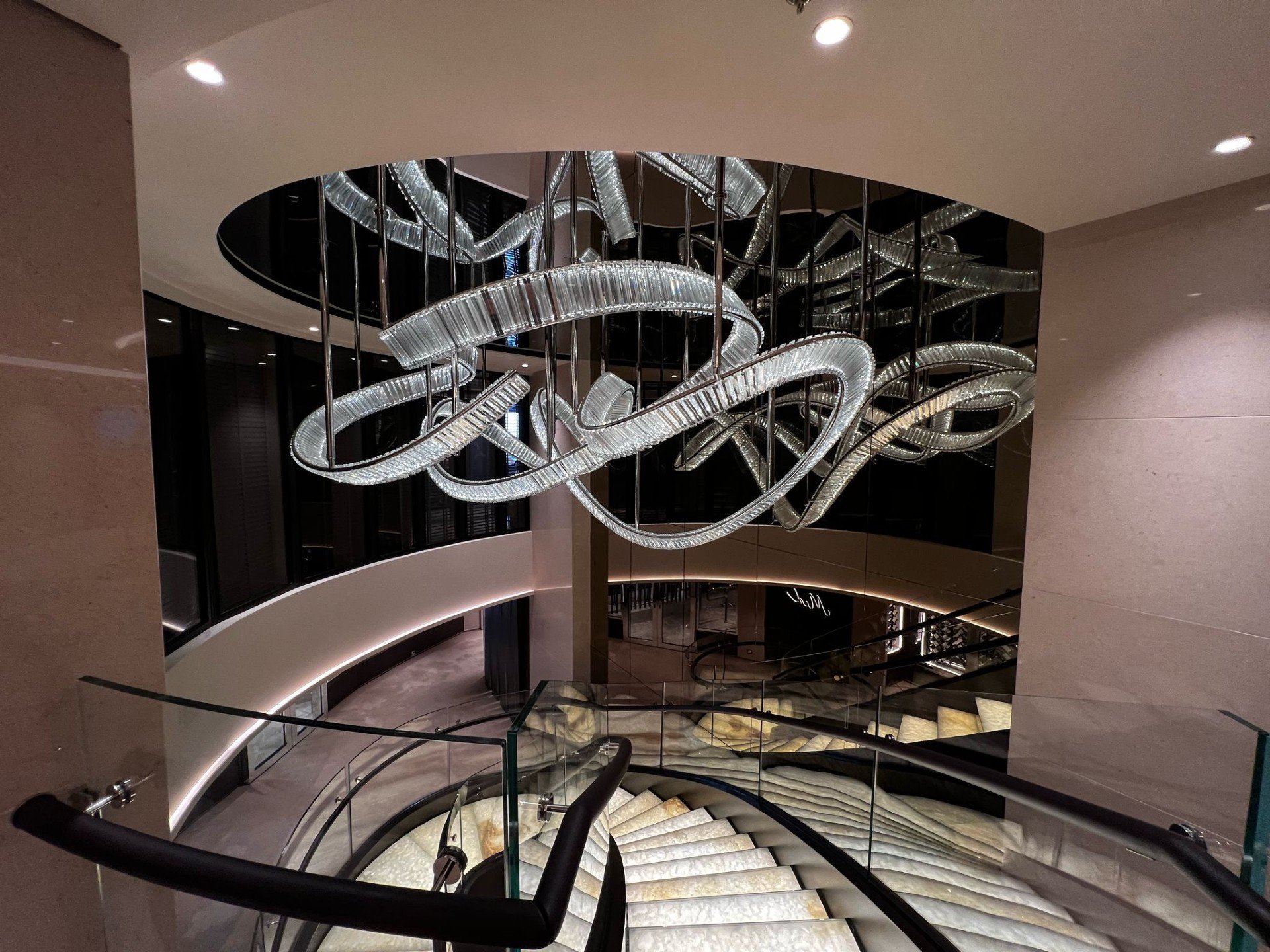
  • Spacious suites as standard — even the entry-level cabins are over 370 sq ft, complete with a large verandah, dining area, dressing space, and ample storage (we didn’t even use all of it).

  • Fine dining and creative drinks — eight bars, five restaurants, 15+ complimentary wines with every meal, and a bottle of champagne waiting in your suite.

  • True all-inclusive — fares cover gratuities, port taxes, and fast Wi-Fi (with three devices per guest). Only excursions and high-end wines/champagnes cost extra.

  • And yes, this ship was designed for personal space. With four pools and hundreds of loungers, there’s no need to fight for a spot at dawn.

A Few More Perks You’ll Love:

Complimentary access to thermal suite amenities — sauna, steam room, salt cave, and even a tropical experience shower.

No traditional dining rooms or assigned seats — choose from:

🥩 Marble & Co. – Elegant steakhouse

🍣 Sakura – Pan-Asian bistro

🍷 Fil Rouge – Sophisticated European dining

🌊 Med Yacht Club – Nautical Mediterranean fare

For relaxed meals: The Emporium buffet on Deck 11 offers a wide range, from seafood and pizza to roasts and fresh salads.

Plus: 24-hour room service, a creperie, and a gelateria — always included.

You truly have to experience the cuisine to appreciate just how exceptional it is.
As for entertainment — there's something different every night. We were especially impressed by the
Flamenco performance and the magician, both of which exceeded expectations.

For your personal consultation, give Rob Lipman a call this weekend at 📞 (512) 423-0701, or drop an email with the best time to call: 📧 rob@summitmgt.com — you’ll be glad you did!

Until April 22, we can offer you an exclusive 5% discount off the lowest fare available directly through Explora.

Cruises are available through late 2026, including holiday sailings for Christmas and New Year’s 2025, across the Caribbean, Mediterranean, and Middle East.

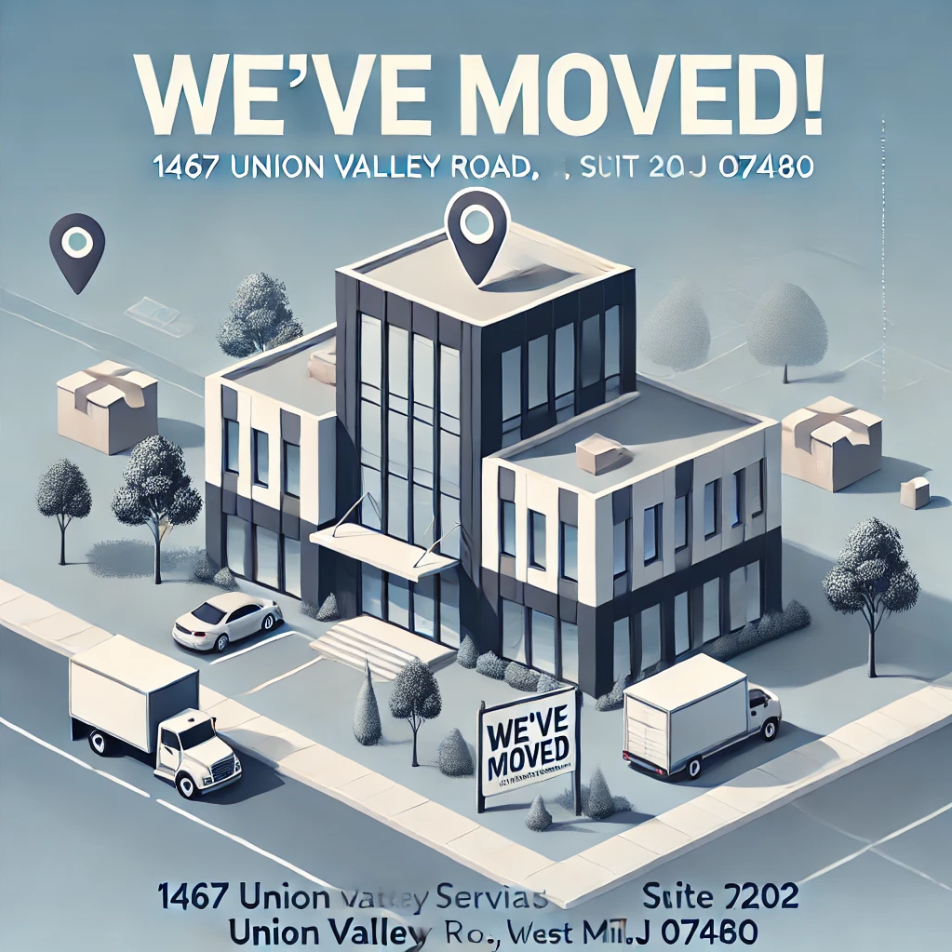
Exciting News: We’ve Relocated!

Summit Management is excited to announce our move to a new office designed to better support our team and operations. Our new location is conveniently situated closer to many of our employees’ homes, enhancing our flexibility for in-person collaboration while still embracing our hybrid and remote work model.

After more than 35 years at our Cedar Grove headquarters, along with our remote offices across the U.S., we continue to offer the same full range of services—air ticketing, meeting services, corporate travel, vacation planning, and more—without interruption.

Please update your records with our new address:

Summit Management Services
1467 Union Valley Road, Suite 202
West Milford, NJ 07480
Phone: 973-239-4005
Email: (unchanged) info@summitmgt.com

We look forward to continuing to provide you with the personalized attention and expert support you’ve come to expect.

Joseph Lipman

President

Summit Handles It All

We handle it all:

• Sourcing

• Planning

• Air ticketing

• Hotel negotiations

• Onsite staffing and logistics

• Invitation process management

• And so much more

Whether it’s full-service or à la carte, we tailor our support to your needs.

Call Summit Management at 973-390-1736 or visit www.summitmgt.com.

Ask for Joe Lipman.

#JoeKnows #AskMrLipman #AskClaudette #MeetingExperts #EventSolutions

#AskMarty #NextNormalMeeting #Incentive #Meetings 
Why Every Traveller Needs a Travel Agent When Plans Go Wrong?

Having a travel agent saves you from navigating chaotic situations like mass flight cancellations, such as those recently seen at Heathrow. Agents can quickly secure hotels for overnight stays and rebook flights while you avoid endless phone holds and airport lines. They access a broad range of flight options and often find better routes or fares than what’s publicly listed. In a crisis, they’re your personal advocate—handling logistics, changes, and communication so you don’t have to. When things go wrong, having a professional on your side can make all the difference between travel chaos and a smooth recovery.

#IncentiveTravel #NextNormalMeetings #TravelAgent #MeetingServices #MartyKnow #AskMrLipman
Call Marty at 973-390-4000 ext 110


National Car Rental Petra Airport, Aman Jordan 

Rental Fraud Uncovered: A Lesson in Standing Your Ground:

I’ve said it before, and I’ll say it again—always take photos and videos of your rental car before you drive away. Take the time to get out, walk around, and document everything. This simple habit saved me big time on my recent rental experience in Amman.

The Attempted Scam:

Returning my car at Amman Airport, I had barely made it inside when the rental staff flagged me down. “There’s damage to the car,” they claimed, immediately presenting photos of the front grille and side panel showing clear dents and scratches.

I looked at the photos and asked, “Are you certain this damage happened while I had the car?”

Their response? “Absolutely. We inspect our cars before every rental.”

The Power of Documentation:

I then asked, “What if I show you proof that this damage existed before I even left the lot?”

Their demeanor changed instantly. They told me it wouldn’t matter—I still had to pay. And not through my rental insurance. The employee specifically asked for cash.

Fortunately, I had followed my own advice. I pulled out my phone, played a video I had taken before driving off, and showed the exact same damage already there when I picked up the car.

Their response? “When did you take that?”

I answered, “The moment I rented the car, while walking around with your staff.”

Silence. The scam had fallen apart.

The Takeaway:

1. Always document your rental before leaving. Take photos and videos from all angles, including any pre-existing damage.

2. Stand your ground. Don’t let staff intimidate you into paying for damage you didn’t cause.

3. Don’t pay cash. If there’s a dispute, let the charge go through your credit card so you can contest it later.

4. Stay calm but firm. You don’t need to argue—just show your evidence and let it speak for itself.

Shame on National Car Rental at Amman Airport:

This was nothing but an attempted cash grab, and National Car Rental at Amman Airport should be held accountable. Travelers shouldn’t have to deal with dishonest tactics like this.

Always protect yourself—because sometimes, your best defense is simply having the receipts.

#JoeKnows #AskMrLipman